Interview: Collaboration and Interdependence in International Ministry
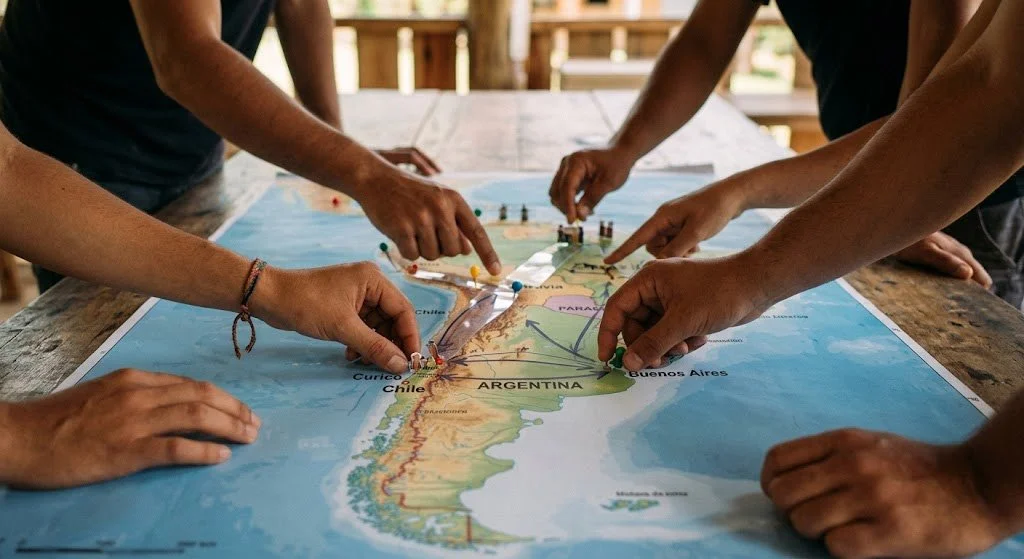
The work of the Charis Alliance in Chile began in 1998, when a Chilean man, José Sepúlveda, who was living in Argentina, decided to return to his home country with his family to plant a church. In 2001, a family from Brazil, the Silvas, and a young Argentine woman, Adriana Camandona, joined this effort. Later, in 2003, Adriana married Juan Sáez, a Chilean who had lived in Argentina for twelve years.
This team, which for many years maintained a multicultural character and received continual contributions from people from different countries, settled in the city of Curicó. With a population of around 160,000, Curicó is surrounded by vineyards, mountains, and fertile landscapes, combining simplicity, identity, and natural beauty in the heart of Chile’s Central Valley.
The following interview will give us insight into how the church in Argentina continues to be an important source of support for our Chilean brothers and sisters and how new projects are beginning to take shape in 2026.
Participants:
Walter Testa
Juan Sáez
Interviewer: Adriana Camandola and Alejandro Robles
1. Can you share your experience in collaborating with or supporting ministries in other countries?
Walter Testa:
I strongly believe in collaboration, interdependence, and building meaningful relationships with ministries in different countries. Our experience began in Mexico, where we were based in Mexico City and traveled extensively throughout the country, working with both new and established ministries.
During that time, we also developed a burden for Guatemala. We made initial contact there, which led to a deep and lasting relationship with local leaders and their ministry. This opened doors to serve in other Central American countries such as Honduras, El Salvador, and Nicaragua, where we participated in various projects, including leadership training, holistic ministry initiatives, evangelism, and discipleship.
These experiences were deeply enriching. We did not go merely to teach but also to learn. We were mutually strengthened—culturally and spiritually. It was truly an experience of giving and receiving.
In addition, we have served in Brazil, Uruguay, and Chile, organizing leadership gatherings, training events, and mission trips. Our vision has always been to connect and strengthen the Church across Latin America through collaborative efforts.
2. What does your current support for Chile look like?
Walter Testa:
The project in Chile is ambitious, but we have defined three concrete actions for 2026:
Leadership Training: A monthly training initiative led by Latin American leaders, focusing on topics relevant to the needs of Chilean leadership.
Pastoral Support: A team of four to five couples will maintain regular contact with local leaders, providing encouragement, prayer, and relational support, while also strengthening evangelism and discipleship efforts.
Mission Visits: Two visits are planned—one with a small leadership-focused team for pastoral care and training, and another with a larger group (primarily young people) focused on hands-on mission work such as evangelism and discipleship.
3. Who organizes and leads this initiative?
Walter Testa:
This initiative was born out of a personal burden and vision for Chile, especially after a recent visit. However, it has developed into a collaborative effort involving multiple leaders from different countries.
While I am helping coordinate, the project will not be centered on one individual. We are intentionally building a team where many contribute, and most importantly, where the Chilean leaders have the final say. Our role is to serve and support according to their needs and direction.
4. How often do you communicate, and what challenges have you encountered?
Walter Testa:
Since this is a developing project, we are working toward maintaining consistent and fluid communication. We believe that frequent and clear communication is essential for healthy collaboration.
One major challenge is involving a broader group of people internationally. This could happen by encouraging others to participate through prayer, financial support, or direct involvement. Another key challenge is accurately identifying and responding to the real needs of the leaders and churches in Chile so that our efforts are truly effective.
5. What has been your experience in supporting ministries in other countries?
Juan Sáez:
For me, it has been a great privilege. I have had opportunities to connect with leaders from different countries who face similar challenges in ministry. These interactions are both encouraging and challenging—they inspire us to grow and learn.
I have participated in international gatherings, including events in Brazil, and I was involved in relief efforts in Mexico after an earthquake. As a church, we have also contributed to mission efforts in Ecuador and supported other ministries financially and practically.
These experiences help us feel part of a global Church and united beyond borders.
6. What results have you seen from collaboration with Argentina?
Juan Sáez:
Argentina has played a vital role in the development of the ministry in Chile. From the initial stages, there has been consistent support through training, missionary sending, and financial assistance.
Beyond the practical support, what stands out most is the relationship. The friendship, pastoral care, and shared commitment have made a lasting impact.
We have also seen tangible results in leadership development and training. For example, members of our church have participated in mission training programs, which has strengthened our local ministry.
7. What results do you expect from the current collaboration?
Juan Sáez:
We expect continued growth in leadership development and ministry effectiveness. This collaboration allows us to plan strategically, strengthen our teams, and create opportunities for both those who serve and those who receive support.
Additionally, mission experiences impact those who participate, helping them grow spiritually and become more engaged in their local churches.
8. How can this ministry be sustainable in the long term?
Walter Testa:
Sustainability comes through shared ownership. If the vision depends on one person, it will not last. But if many people embrace and carry the vision, it can continue over time.
We are focusing on developing leaders, fostering commitment, and creating reproducible models of ministry that can grow and adapt.
Juan Sáez:
I agree. It is also important to communicate and share this vision widely. As more people understand and embrace the mission, they will become involved, which strengthens sustainability.
9. What lessons have you learned from this experience?
Walter Testa:
One of the greatest lessons is that ministry is always a two-way exchange. We often think we are going to give, but we end up receiving even more.
For example, working with indigenous communities in Mexico taught us humility and challenged us deeply. We were enriched far beyond our expectations.
Juan Sáez:
Communication is key. Today, we have many tools available to stay connected, and we should use them intentionally. Building relationships and understanding needs are essential for effective collaboration.
10. What advice would you give to churches that want to support ministries in other countries?
Walter Testa:
The first step is to connect. Many churches do not get involved simply because they are unaware of the needs.
Once connected, support can take many forms: prayer, financial giving, training, and sending teams. But everything begins with building relationships and understanding the context.
Conclusion
This interview highlights the importance of interdependence, collaboration, and relational ministry in advancing the work of the Church globally. Through shared vision, communication, and commitment, churches can work together effectively across borders to strengthen one another and expand the reach of the Gospel.
